
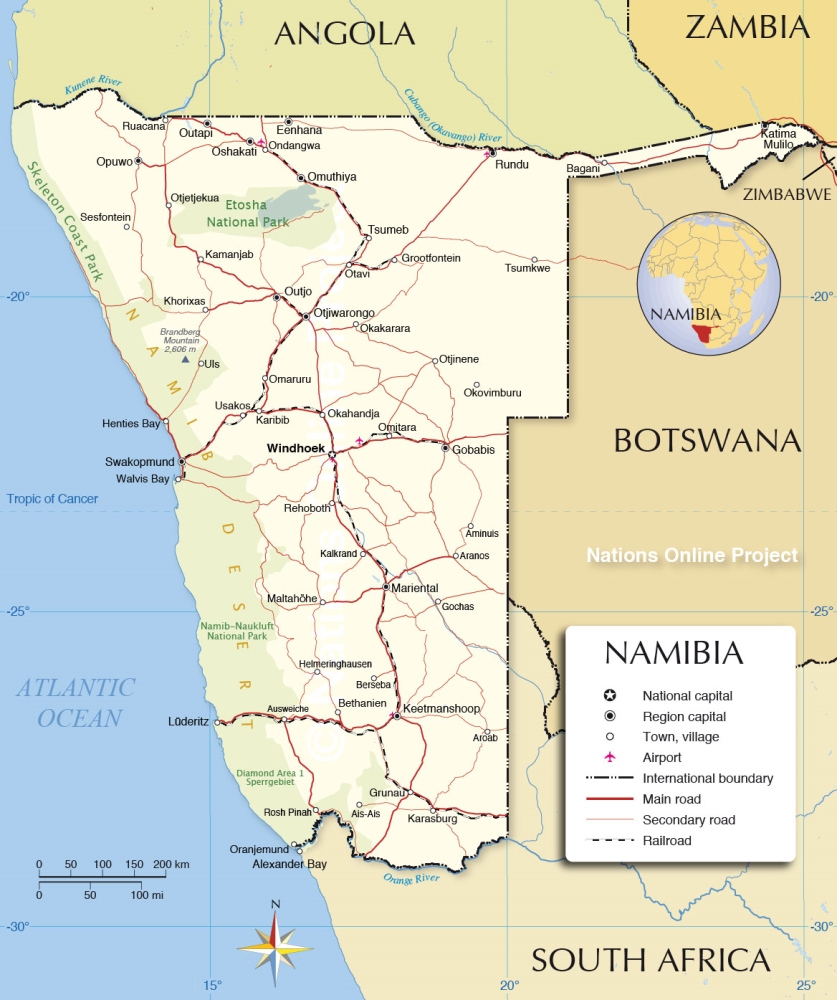
 Namibia is situated in the Southwestern corner of Africa on the Atlantic coast. It shares borders with Angola and Zambia to the north, Botswana to the east, and South Africa to the south. The country gained independence from South Africa’s then apartheid regime in 1990. Namibia is a country of breathtaking contrasts, vast, rugged and unspoiled. Internationally Namibia is well known for its swirling golden dunes, shimmering ocean, pristine landscapes and abundant wild life. Along the Namibian coast lies the Namib Desert, a breathtakingly barren yet captivating sand landscape. The hot desert coast meets the icy waters of the Atlantic Ocean often causing a blanket of fog. Unlike the east coast, the north of Namibia is rich in vegetation and fertile with a number of flowing rivers. Two of these, the Zambezi and the Okavango, rank among the great rivers of Africa. The strip is also the site of several game parks, which while not offering such an abundance of wildlife certainly provide spectacular scenery and relative solitude.
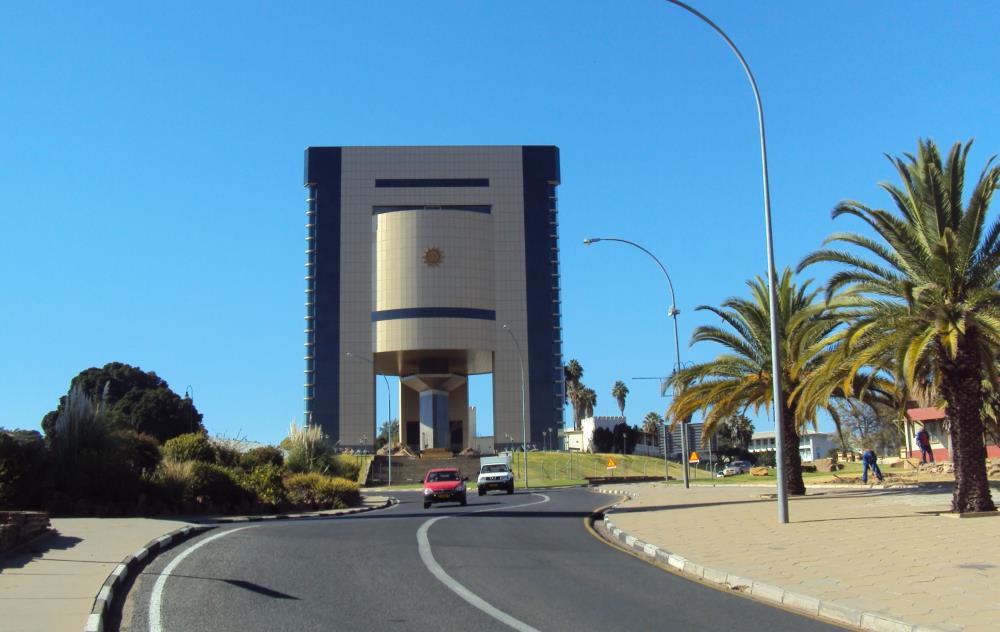 Namibia has several notable deserts, most particularly the Namib Desert, stretching some 1,572km of coastline. There are several national parks along the Namib Desert, the largest of which is in the south, called Namib-Naukluft Park. This section of the Namib Desert contains the Sossusvlei Sand Dunes, the largest sand dunes in the world. Dune 7, at approximately 383 meters is the highest sand dune in the world. By comparison, Arabian sand dunes are over 100 meters lower than this. Namibia’s center is occupied by a high escarpment plain. Windhoek, the capital and the only city of any size, is located smack dab in the middle of the country. Walvis Bay is the country’s industrial hub and main port. This vibrant harbor city is linked with the rest of Southern Africa via the Trans-Caprivi, Trans-Kunene and Trans-Kalahari highways. This expanded transport network makes Walvis Bay the import and export gateway for Southern Africa.
Amidst this seemingly untamed and wild African country, lies a country that is governed by a peaceful, stable and vibrant society. Namibia boasts with modern facilities, clean towns and a well-developed infrastructure. With more than 13 ethnic groups and languages, Namibia is a success story in a continent that is viewed with skepticism. It is here that you discover the beauty, diversity, remoteness and the wonder of Africa at its best.
 The history of Namibia begins with the San, who were living here at least two thousand years ago. As a nation, however, Namibia is relatively young, having gained its independence after prolonged struggles only on 21 March 1990. In 1878, the United Kingdom annexed Walvis Bay on behalf of Cape Colony and the area was incorporated into the Cape of Good Hope in 1884. Negotiations between the United Kingdom and Germany resulted in Germany’s annexation of the coastal region, excluding Walvis Bay. German colonial power was consolidated and prime grazing land passed to White control as a result of the Herero and Nama wars of 1904-08. German administration ended during World War I following South African occupation in 1915. Namibia was proclaimed a German protectorate in 1884. The conquest of Namibia (then was called South West Africa) by South African forces during World War 1 resulted in its subsequent administration by South Africa under a 1920 League of Nations mandate.
The South African government refused to give independence to the Namibian people, despite many resolutions by the United Nations for independence to the Namibian people. Therefore, Swapo (South-west Africa People’s Organization) liberation movement started the liberation war against the occupying South African forces. This resulted in the South African government to be forced to accept the 1989 implementation of the United Nations resolution 435 for free and fair elections to the Namibian people.
Elections took place and were won by SWAPO with almost 80% of the Namibian people voting in favour of Swapo. In 1990, Namibia celebrated its freedom with SWAPO forming the first democratic elected government and thereafter becoming a member of the United Nations community. On March 1, 1994, the coastal enclave of Walvis Bay and 12 offshore islands were transferred to Namibia by South Africa. This followed 3 years of bilateral negotiations between the two governments and the establishment of a transitional Joint Administrative Authority (JAA) in November 1992 to administer the territory. The peaceful resolution of this territorial dispute, which dated back to 1878, was praised by the United States and the international community, as it fulfilled the provisions of UN Security Council 432 (1978) which declared Walvis Bay to be an integral part of Namibia on the 21st of march 1994.
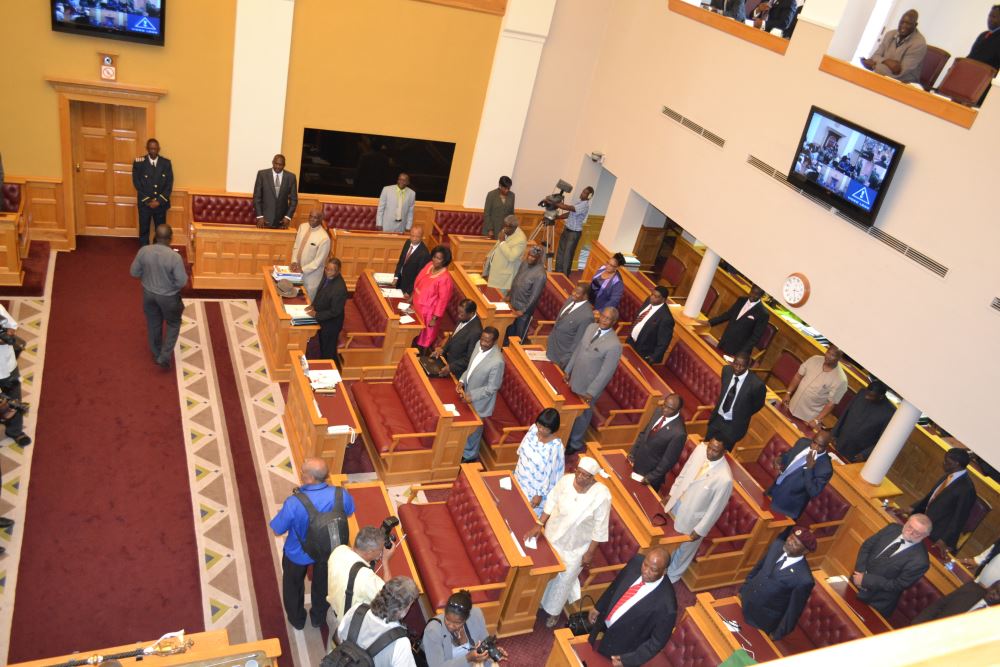
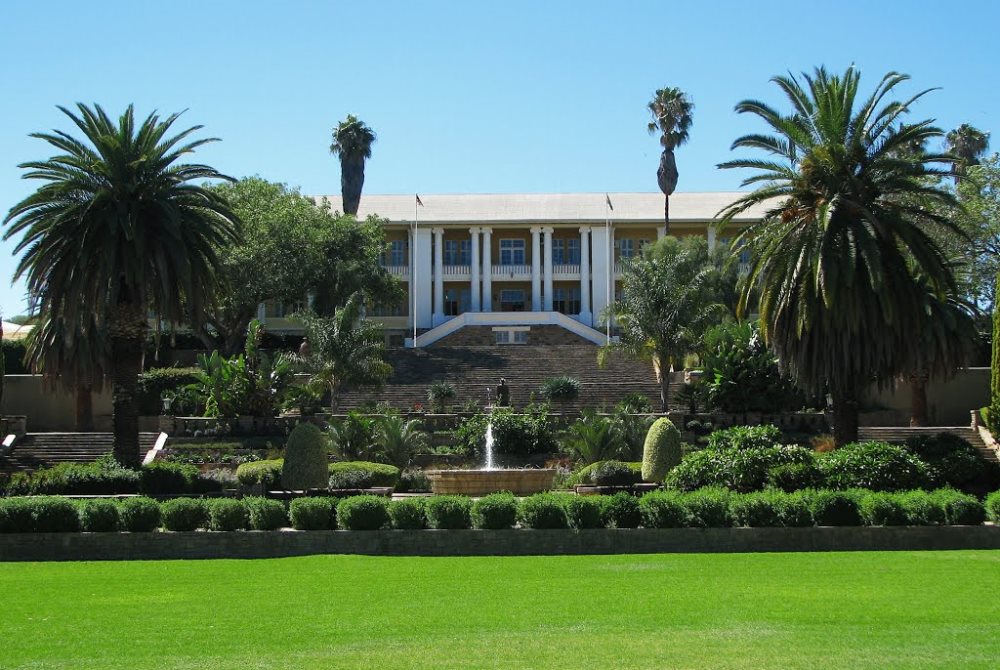 Namibia is ruled by a Multiparty Parliament and has a democratic Constitution that is highly regarded by the international community. The Government’s policy of national reconciliation and unity, embraces the concepts of tolerance, respect for differing political views and racial and ethnic harmony. The constitution establishes a bicameral Parliament and provides for general elections every 5 years and regional elections every 6 years. Members of the 72–seat National Assembly are elected on a party list system on a proportional basis. Members of the 26-seat National Council are elected from within popularly elected Regional Councils.
The three branches of government are subject to checks and balances and provision is made for judicial review. The judicial structure in Namibia largely parallels that of South Africa and comprises a Supreme Court, the High Court, and lower courts. Roman-Dutch law has been the common law of the territory since 1919. The Executive branch comprises the Chief of State who is president of Namibia and the Cabinet which consists of members of the National Assembly.
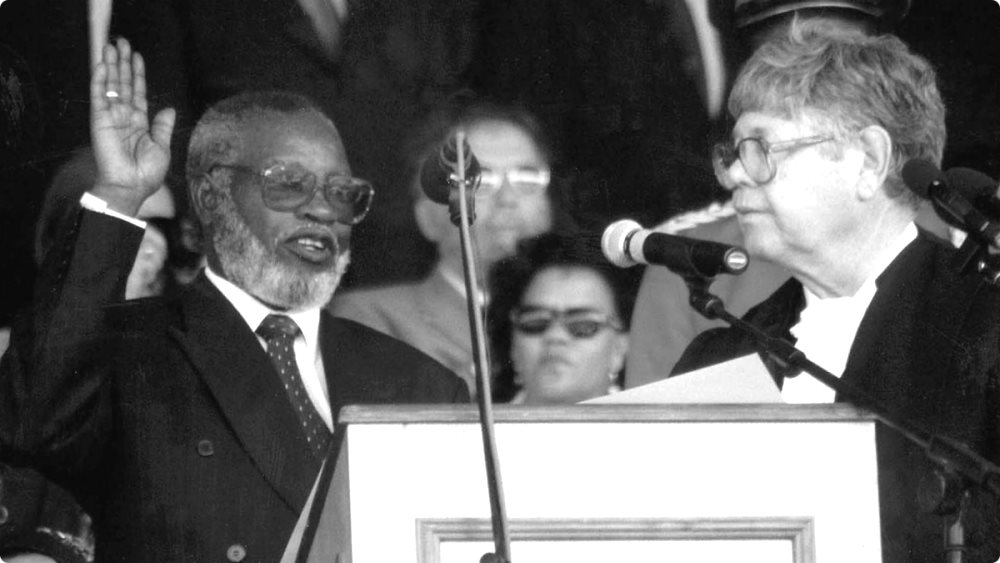
 Dr. Sam Nujoma, the Founding Father of the Namibian Nation and leader of the liberation movement (Swapo), was elected democratically in free and fair elections as the first President of the Namibian republic in 1990. He served the Namibian nation tirelessly and created reconciliation amongst its people. In November 2004, the Founding Father announced his retirement and the Swapo Party democratically elected the Minister of Lands, Resettlement and Rehabilitation, Hifikepunye Pohamba to be the leader of the Swapo Party and candidate for the presidential elections. President Pohamba was elected by the Namibian people in free and fair democratic elections and inaugurated in March 2005 in conjunction with celebrations marking the country’s fifteenth anniversary.
As a republic, Namibia is also a secular state guaranteeing the freedom of religion and media. It is divided into 13 administrative regions including Caprivi, Erongo, Hardap, Karas, Khomas, Kunene, Ohangwena, Okavango, Omaheke, Omusati, Oshana, Oshikoto, and Otjozondjupa. The constitution provides for the private ownership of property and for human rights protections and states that Namibia should have a mixed economy and encourage foreign investment. Namibia is a member state of the United Nations (UN), the Southern African Development Community (SADC), the African Union (AU) and the Commonwealth of Nations. Namibia became the 160th member of the United Nations on April 23, 1990, and the 50th member of the British Commonwealth upon independence.
President Hage Geingob
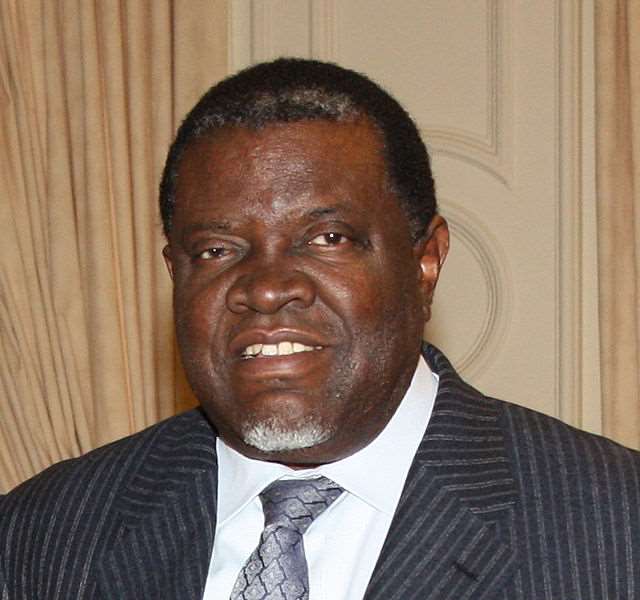 Hage Gottfried Geingob is the third and the current President of Namibia, in office since 21 March 2015. Geingob was the first Prime Minister of Namibia from 21 March 1990 until 28 August 2002, he was Minister of Trade and Industry from 2008 to 2012. He served as Prime Minister again from 4 December 2012 to 21 March 2015. Since 2007, he has been, Vice-President, and currently is the President of the South West Africa People’s Organization (SWAPO), Namibia’s ruling party.
Geingob was born on 3 August 1941 in Otjiwarongo. He received his early education at Otavi and later in Windhoek. In 1960, he was expelled from Augustineum for having participated in a march to protest the poor quality of education. He was, however, re-admitted and was able to finish the teacher-training course in 1961. Subsequently, he took up a teaching position at the Tsumeb Primary School in Central Namibia but soon discovered that his thirst for knowledge was unlikely to be quenched in Namibia. He left his job to seek knowledge and instruction that could help him change the system. He, with three of his colleagues, walked and hitch-hiked to Botswana to escape the system. From Botswana, he was scheduled to go to Dar es Salaam, Tanzania, on a plane chartered by the African National Congress (ANC). However, this plane was blown up by the South Africans when it was still on the ground because the time bomb went off prematurely. As a result, Hage Geingob stayed on in Botswana where he served as Assistant South West Africa People’s Organization (SWAPO) Representative in Botswana (1963–64).
In 1964, Hage Geingob left for the United States to study at Temple University in Philadelphia, Pennsylvania, where he was granted a scholarship. Subsequently, he obtained a BA degree from Fordham University in New York in 1970 and an MA degree in International Relations from the Graduate Faculty of The New School, New York in 1974. In 1964, he was appointed SWAPO Representative at the United Nations and to the Americas. He served in this position until 1971. He travelled extensively, criss-crossing the United States, talking with people, addressing gatherings. In 1989, he was elected by the Politburo of SWAPO to spearhead SWAPO’s election campaign in Namibia. To carry out this assignment, he returned to Namibia with many of his colleagues on 18 June 1989, after 27 years’ absence from the country. As SWAPO’s Director of Elections, Hage Geingob along with other members of his directorate established SWAPO election centres throughout the country and spearheaded an election campaign which brought SWAPO to power in Namibia.
On 21 March 1990, Hage Geingob was sworn in as the first Prime Minister of the Republic of Namibia, and on 21 March 1995, he was again sworn in as the Prime Minister of Namibia for the second term. He served in this capacity for twelve years. Hage Geingob, as Prime Minister introduced modern management approaches to the running of the government. Geingob married Monica Kalondo on February 14, 2015. Hage Geingob Rugby Stadium in Windhoek is named after him.
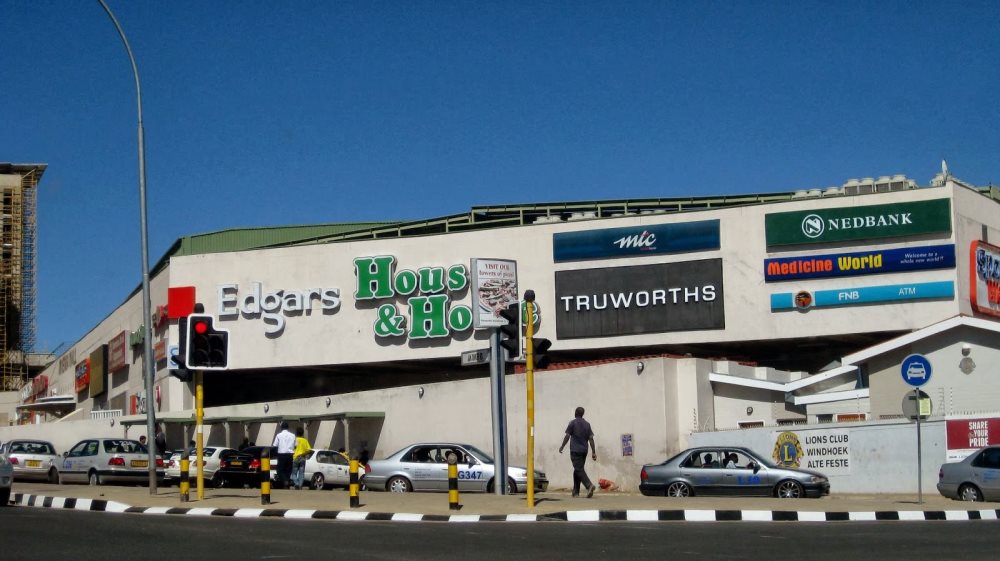 Since independence, the Namibian Government has pursued free-market economic principles designed to promote commercial development and job creation to bring disadvantaged Namibians into the economic mainstream. Namibia’s economy consists primarily of mining and manufacturing, which represent 74% and 11% of the Gross Domestic Product (GDP) respectively. Namibia’s economy is closely tied to South Africa’s, due to their shared history. Namibia is the fourth largest exporter of non-fuel minerals in Africa, and the world’s third largest producer of uranium. Rich alluvial diamond deposits make Namibia a primary source for gem-quality diamonds. Namibia also produces large quantities of lead, zinc, tin, silver, and tungsten.
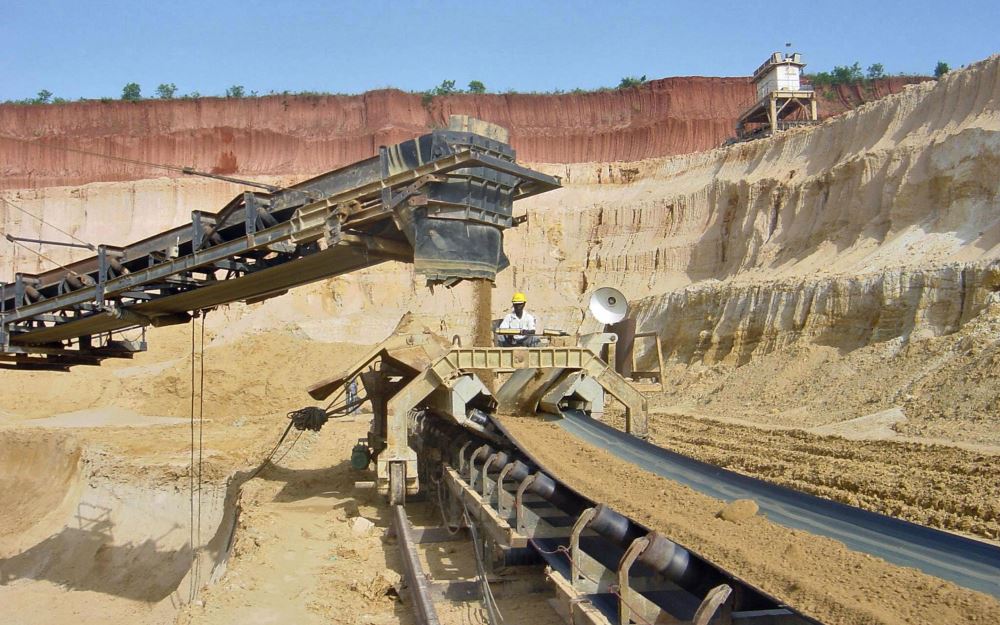 Given its small domestic market but favorable location and a superb transport and communications base, Namibia is a leading advocate of regional economic integration. In addition to its membership to the Commonwealth, Namibia is also a member of the Southern African Development Community (SADC). The country is also a signatory to the Southern African Customs Union (SACU) with South Africa, Botswana, Lesotho and Swaziland. Within SACU, no tariffs exist on goods produced in and moving among the member states. Over 80% of Namibia’s imports originate in South Africa and many Namibian exports are destined for the South African market or transit that country.
Outside of South Africa, the EU (primarily the U.K. and Spain) is the chief market for Namibian exports. Namibia’s exports consist mainly of precious stones, diamonds, uranium, copper, gold, zinc, salt, meat, fish, oysters, grapes and leather. Under the U.S. African Growth and Opportunity Act (AGOA), apparel exports are rapidly growing. Namibia has one of the richest uranium deposits in the world and various mines have been established in the Erongo region. Large gas reserves have been discovered off-shore from Namibia, while the prospects of off-shore oil drilling looks promising. Exploratory work has already begun.