
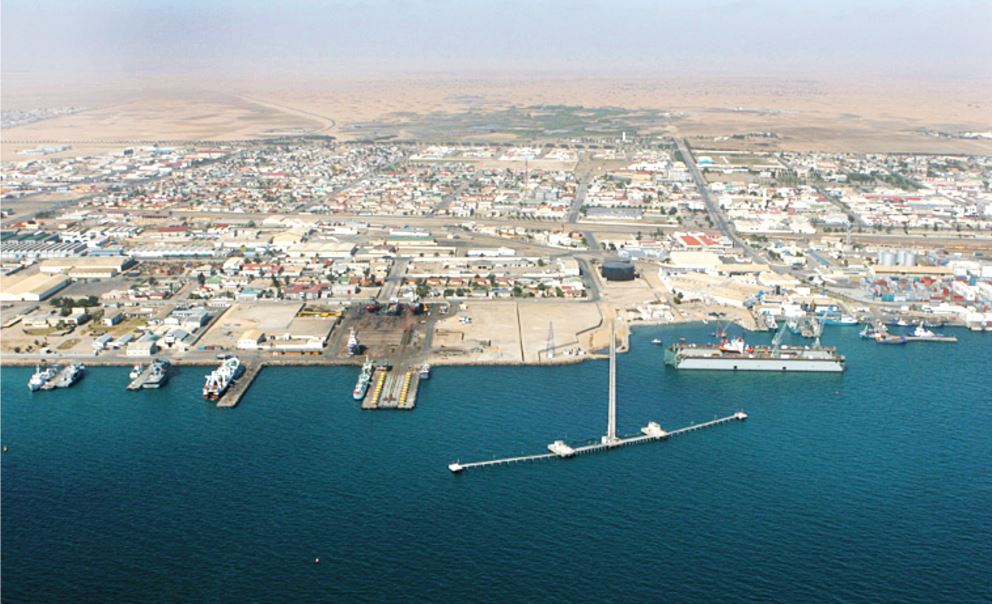
 Walvis Bay is geographically and internationally well situated. Located on the southwest coast of Africa (central coast of Namibia) along the Atlantic Ocean, the city is about 700 nautical miles from Cape Town, South Africa and 900 nautical miles from Luanda, Angola. The harbor city is well protected by the Pelican Peninsular with a desert climate and has great potential for expansion and growth. The expansive Walvis Bay Municipal area covers 1,124km² which includes some 60km of coastline. With more than 90,000 inhabitants, Walvis Bay has always been a drawing card for job seekers and investors alike. Although its economy revolves around its internationally renowned fishing industry, other industries are emerging as strong income generating sectors. This includes the budding tourism industry, engineering, cargo handling and property development.
Walvis Bay enjoys a near-perfect climate thanks to the cold Benguella Current, which creates temperate conditions all year round and an obvious attractive choice for entrepreneurs, residents and tourists alike. This is particularly true in summer (November to April), when Walvis Bay becomes a cool haven for those seeking refuge from the inland heat. Walvis Bay is a thriving city with a rapidly growing economy. Boasting one of the busiest ports in Africa, Walvis Bay has established itself as the gateway for trade, imports and exports between America, Europe, Far East and landlocked countries in Africa.
 FISHING INDUSTRY
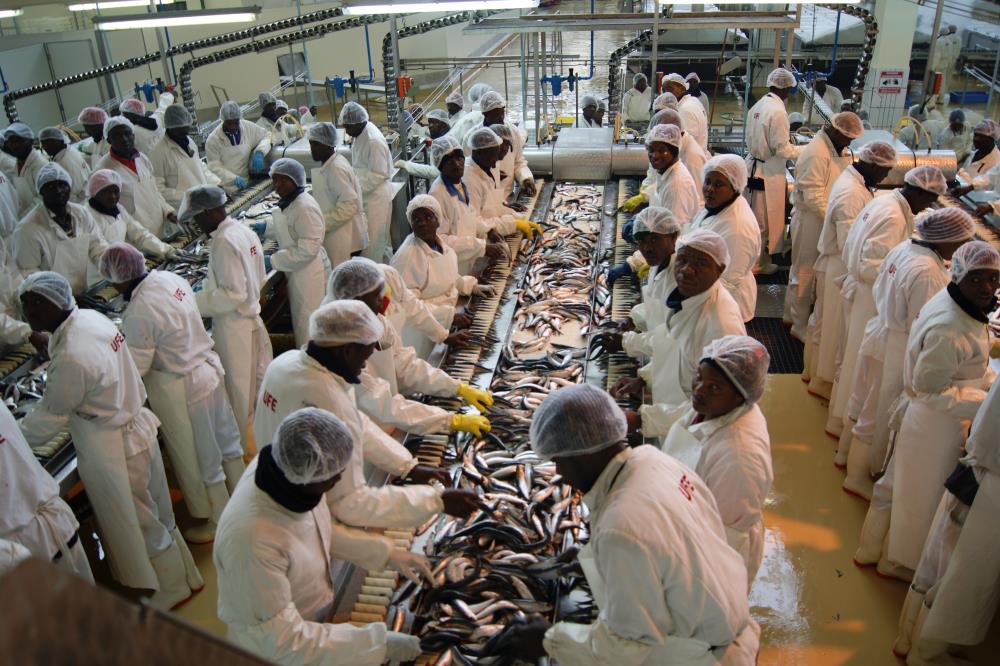
The fishing Industry of Namibia is respected as one of the most well managed industries in the world and employs approximately 10,000 people. With more than 2km of landing quays, cold storage, processing and canning facilities the fishing industry continues to play an important role in the development of Walvis Bay. The main species harvested are Hake, Horse mackerel, Pilchards, Rock Lobster (grayfish), Tuna, Sole and Orange Roughy. Walvis Bay also produces fishmeal for various purposes. Aquaculture has taken over as a focus growth area in the bay in the form of extensive Oyster, Mussel and Abalone production. High value-added fish products are processed for export purposes to niche markets in Europe, Australia, United States, Far East and Africa.
ENGINEERING & MANUFACTURING
With the need for oilrig and ship repair/maintenance, well-equipped engineering firms with a high degree of expertise have emerged to provide a wide range of services to the fishing and other industries. This has also spawned to support industries such as shipping agents, ship chandlers, construction, retail services, transport and accommodation.
 SALT REFINERY
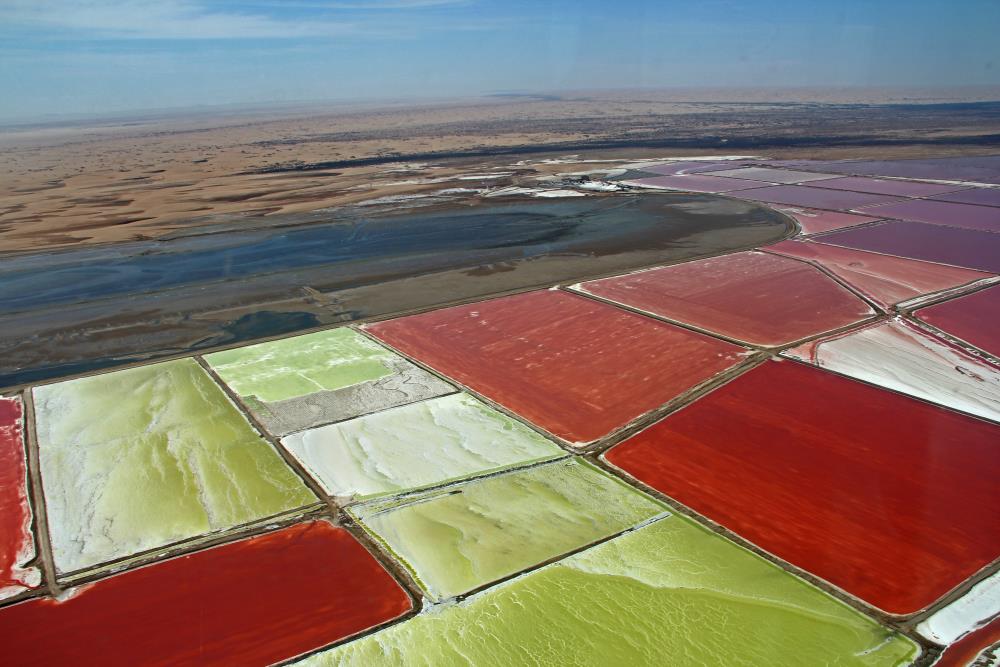
The 3,500-hectare salt field to the south of Walvis Bay is one of the largest solar evaporation facilities in Africa, processing 42 million ton of seawater each year to produce more than 1,200 000.00 tons of high-quality salt. The saltpans are situated be seen south of the Walvis Bay’s Lagoon and is especially eye-catching due to the different hues of red water that the evaporating salt causes.
GRANITE
Rough blocks of granite are quarried about 15 km to the east of Walvis Bay.Currently the largest cutting and manufacturing plant in Africa under 15 000 square meters, is in Walvis Bay. The granite has an attractive yellowish-grey colour. The rough blocks of granite are cut and polished in Walvis Bay and it is then exported as natural stone product for overseas markets notably the US and European markets for use in hotel lobbies, kitchens and other areas that require a marble like finish.
URANIUM
Close to Walvis Bay, two uranium mines are operational and 12 more are in process. About 3,800 tons uranium is produced annually and has led to a boom in interest from global players that wish to secure supplies for their nuclear energy expansion plans. The interest in uranium is a boost to our economy. The increase in local uranium mining enables Namibia to contribute towards resolving the global energy shortage.
OIL AND GAS
Offshore exploration for oil and gas along the Namibian coast continues. The port serves as an important supply centre to the various companies prospecting and offshore activities along the coast of Namibia.
 LOGISTICS & TRANSPORT
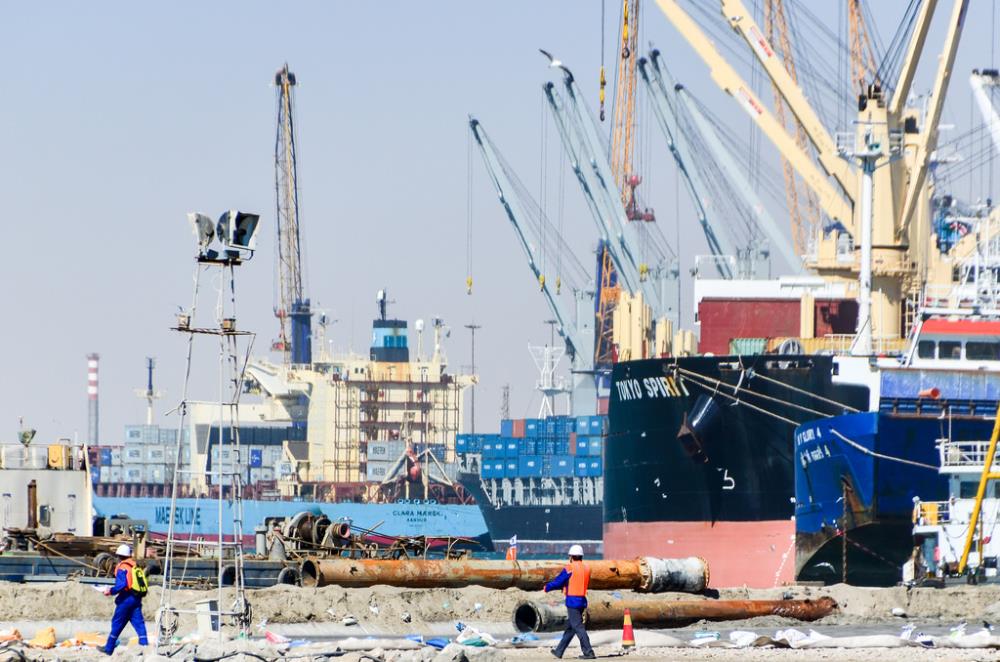
The port of Walvis Bay play a critical role in freight logistics and supply chain management of imports and exports between the rest of the world anlandlocked SADC countries. The role of transport and logistics has become increasingly important for Namibia’s economy. With the rapid growth in cargo volumes along the Walvis Bay corridors and the benefits that the trade routes have to offer, Walvis Bay has been identified to become the logistics hub for Southern Africa. The Port of Walvis Bay, with its deep water depth and stable weather conditions, is strategically located to accelerate the growth of the SADC region as a whole by providing a gateway to Southern Africa. Costs and time savings are achieved along the Walvis Bay corridors by offering the shortest possible regional route on the west coast.
The Walvis Bay corridors are a network of transport routes comprising the Trans-Kalahari Corridor, Walvis Bay-Ndola-Lubumbashi Development Corridor (also known as the Trans-Caprivi Corridor), the Trans-Cunene Corridor and the Port of Walvis Bay. Fast, efficient and safe road and rail transport along the Walvis Bay Corridors further reduces transport costs and makes the regional economy more attractive to global players.
RETAIL & INDUSTRIAL INDUSTRIES
Retail businesses and shops flourish in the city where first world experiences can be enjoyed in the diversified business sector. Varied engineering, industrial and other businesses are found including diamond cutting and regional importers. A strong construction industry supports the building and development activities in and around the city. The local Namibian Dollar currency is equal to the South African Rand. Banking institutions provide comprehensive domestic and international banking services and ensure fast and efficient transfer of funds to and from any centre in the world. With the opening of the Dunes Mall most major retail chains now have outlets Walvis Bay
 Walvis Bay is well linked to Namibia’s rail and road network, with international connections in telecommunications, corridors, air traffic and shipping. The city is linked with the rest of Africa via the Trans-Kalahari and Trans-Caprivi Highways. These two highways play an important role in the Walvis Bay Corridor; a concept currently promoted and marketed by the Walvis Bay Corridor Group to attract more transport business through the port of Walvis Bay. Namibia has a well-established rail network linking it to South Africa and terminating at natural cross border connection points.
PORT
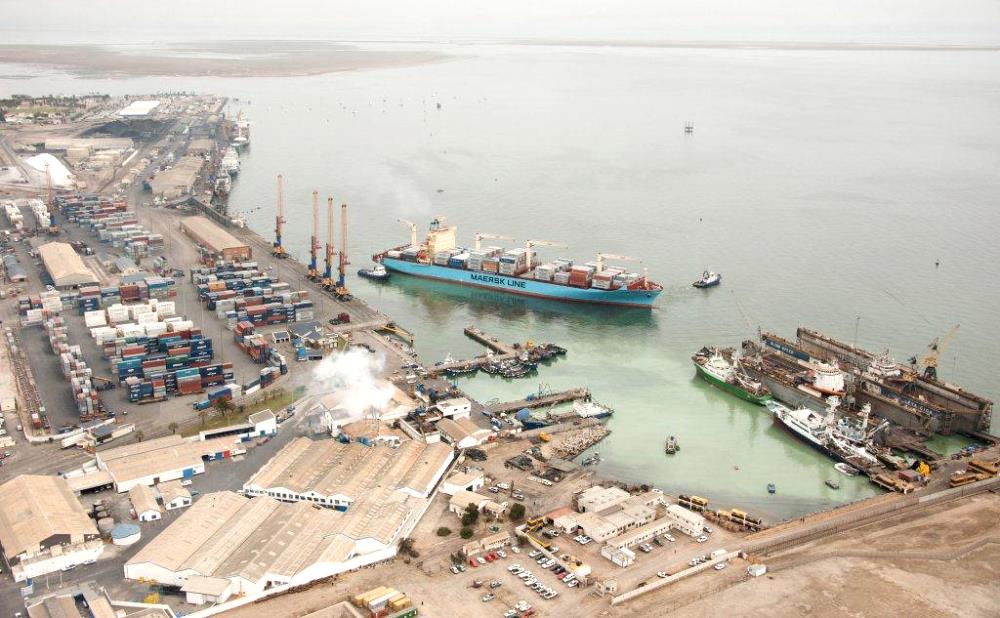
The deep-sea port of Walvis Bay allows for direct access to principal shipping routes. The port offers shippers a time saving of up to five days between the SADC region and Europe and the Americas. Walvis Bay is a congestion-free port with competitive turnaround times, complemented by first-class infrastructure and equipment, ensuring, safe and reliable cargo handling with zero pilferage. The port consists of the Commercial Port and the Fishing Harbor. It offers extensive services with a range of terminal facilities for containers, bulk and break bulk including frozen and dry cargo. The Namibia Ports Authority continues to invest millions of dollars on a medium to long-term basis to make sure Walvis Bay remains one of the most efficient ports in the world.
The port provides a direct link with the Far East, South and North America, Europe and the Southern/Western African Coast. The ship repair industry has grown tremendously over the recent years, with the Synchrolift and additional floating dock facilities providing world-class services. Exporters and importers are guaranteed a saving of at least eight to ten days when shipping to and from the European and American markets. The port offers extensive services with a range of terminal facilities for containers, bulk and break bulk including frozen and dry cargo.
AIRPORT
The Walvis Bay International Airport is situated 11 km to the east of the city. A major upgrade of the airport to the tune of US$200 million is expected to be concluded in October 2008. This upgrade work includes the widening and lengthening of the runway and air traffic systems. This will allow the largest cargo carrier and commercial airplanes and jets to land.
WATER AND ELECTRITY
High quality, potable water from aquifers in the Kuiseb River, is available to both residents and industry. Occasional surface flow recharges the underground aquifers of the Kuiseb River, which has its headwaters in the central highlands of Namibia and is approximately 330km long. There is an ample supply of electricity to serve the needs of Walvis Bay, as well as to accommodate new developments.
MEDICAL FACILITIES
Walvis Bay has two well–equipped hospitals and three clinics, as well as medical support professionals in the private sector. Organized commerce is supported by an active local chamber of commerce and a Port User’s Association. Walvis Bay’s educational institutions are of a very high standard. Primary schools, secondary schools, a seaman’s training college, local branches of a number of tertiary institutions, three libraries and a museum, provide adequate development of human resources. The country boasts one of the most advanced telecommunication infrastructures in Africa, including an international exchange, ISDN broadband data and telephone facilities. Mobile phones function in most parts of Namibia including Walvis Bay. The Information Technology/Telecommunications industry meets global standards and links Namibia to international business and developed communities. Two cellular communication service providers have various antennas throughout Walvis Bay to ensure sound international reception.
ENVIRONMENTAL AND SOCIAL RESPONSIBILITY
Walvis Bay’s remarkable progress has been the result of careful and responsible planning by the local authority and the business community, which includes the application of international best practices of protecting natural resources and upholding social responsibility.
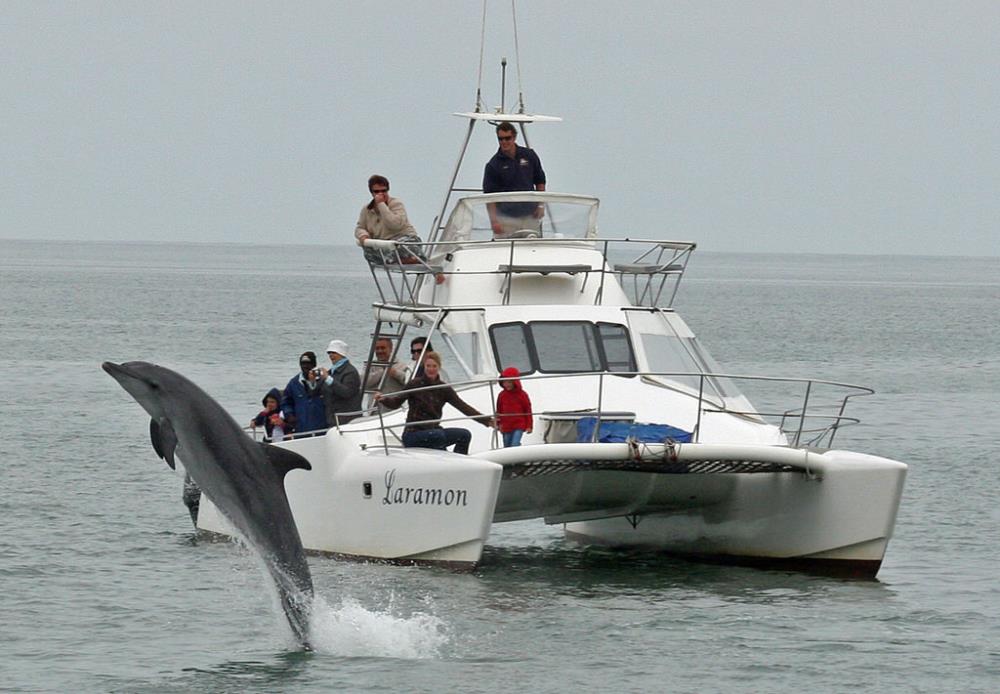 Walvis Bay is blessed with wide-open spaces, scenic beauty and unique marine and plant life. With its endless variety of sun-drenched sport and recreational adventures, your visit to the Skeleton Coast will be an unforgettable experience. Walvis Bay is well suited for the outdoor lifestyle, boasting sports such as sand boarding, kiting, surfing, swimming, angling, sailing, golf and other in– and outdoor sport codes. The coastal strip is an angler’s paradise.Some of the best quality and largest edible fish in Africa are caught from our shores. The sought after fish species include Steen bras, Kabeljou, Snoek and other delicious varieties. Visitors who intend to do fishing need a fishing permit. Undoubtedly amongst the most famous desert landmarks in Namibia is Dune 7, one of the highest crests in the dune belt along the coast.
With picnic sites and shaded with palm trees, the dune is a popular sand–boarding haunt, while simply climbing to the top to see the view is an adventure on its own. The coastal dunes are popular with Para–gliding, sand–boarding and quad–biking enthusiasts. The dominant southwesterly winds create ideal conditions for a variety of water–sports. The Lagoon is an international Ramsar sanctuary for birds. Estimated to be 3,500 years old, it is one of the most important coastal wetlands in Southern Africa. As a must–visit for bird lovers, it provides a feeding ground for an estimated 200,000 birds of 50 species. A 3km long promenade ensures a scenic stroll on its edges. Further, south lay the red to blue hues of the largest solar salt evaporation fields in Africa.
 Those keen to explore the open sea can set off in a sea kayak with an experienced guide. In addition to close-up views of Cape fur seals and water birds, Bottle-nosed dolphins are spotted daily and occasionally leatherback turtles and whales are spotted. Visible from the main road, a few kilometers north of Walvis Bay, visitors can see the Guano Platform. The platform covers 17,000m² and rests on 1,000 freestanding wooden stilts. Local tour operators offer various tour packages whether by quad–bike, off–road vehicles, sea excursions or scenic flights by plane. A wide selection of restaurants and coffee shops offer different cuisines, while shopping centre, banking facilities, postal and other services ensure that your visit is enjoyable and hassle free.
The Walvis Bay EPZ provides a politically stable, virtually crime-free environment, reliable work force and lower production costs. Its incentives are of unlimited duration and apply equally to Namibian and foreign firms. The most attractive and lucrative aspect of the EPZ is the tax-free and low overhead incentives it provides to investors. Furthermore, companies are allowed to repatriate their capital and profits, while enjoying freedom from exchange controls and the holding of foreign currency accounts at local banks.The labor force is young, reliable, trainable and in abundance. Walvis Bay has banking and insurance facilities to cater for the needs of international investors.
The Walvis Bay EPZ does not restrict investors to an industrial sector, as is typically found in similar zones. Investors are free to engage in any manufacturing and value addition processes of their choice, anywhere in Walvis Bay. The Walvis Bay EPZ is looking for investors to set up production plants in the following priority industries such as textile and garment industries, footwear, manufacturing and assembly of electronic equipment, processing industrial products, food stuff and beverages, industrial plastic (without chemical materials), assembling or producing electrical household products, storage and warehousing as well as break-bulk activities (Repackaging).
Since the inception of the Walvis Bay EPZ Management Company in 1996, the idea of expanding the industrial base of Walvis Bay has rapidly gained momentum and the zone is growing fast into one of the world’s newest EPZ success story. The management company’s key purpose is to market Walvis Bay as the safe destination for Foreign Direct Investment (FDI) as a means of fast tracking the industrialization program of the Namibian government.
Being favorably located close to the Port, there is a quick access to the quays where bulk cargo and containers are handled. Walvis Bay’s strategic location reduces trans–shipment time, making it the cost effective choice. Surrounded by a unique and fascinating environment of ethereal dunes of the oldest desert in the world, the Namib Desert, the EPZ regime in Walvis Bay is a window to world trade and investment.
With EPZ status, an investor enjoys the following advantages:
Preferential market access to the EU, USA and other markets due to Namibia’s signatory to the Lome Convention and GSP
Access to the COMESA market of more than 300 million people
Access to non-SACU member countries (Angola, DRC, Zambia, Tanzania, Mauritius, Zimbabwe, Botswana and Mozambique)
Contact
Walvis Bay Export Processing Zone Management Company
Tel: +264 64 205 095
Fax: +264 64 206 132
EPZ Web site
The chamber of commerce in Walvis Bay was established in 1955 and was incorporated into the Namibia Chamber of Commerce and Industry (NCCI), which was newly established on 15 July 1990 as a representative body for the Namibian business sector. Since its inception, the NCCI has successfully facilitated numerous business ventures between its members and businesses elsewhere in the world. Its main mandate is to advocate the interests of its members and to provide a wide range of services to the business community in and outside Namibia. The NCCI has a membership base of over 2,000 businesses from all sectors of the Namibian economy. The Chamber has also established branches in 14 towns in Namibia, in an effort to bring its services closer to its members.
The NCCI has established itself as the premier voice of the Namibian business fraternity and has engaged key stakeholders such as the Government and organized labor on crucial issues affecting the business environment in the country. For many years, our advocacy activities facilitated valuable inputs of the Namibian enterprise sector into policies and laws which have bearing on the business environment in the country.
The NCCI offers a wide range of services to improve the effectiveness, competitiveness and ultimately, the profitability of businesses in the country. Some of these services include adapting to global trends that affect your business, implementing industry best practices on competitiveness, improving internal efficiency and productivity and providing insight into Government policies and their impact on businesses, as well as identifying and capitalizing on networking opportunities with local and international entrepreneurs.
Contact:
NCCI Walvis Bay
P O Box 294
Walvis Bay
Tel:+264 64 205 578
Fax: +264 64 205 580
Website