


Walvis Bay
Overview
Economy
Services
Tourism
NCCI

The expansive Walvis Bay Municipal area covers 1,124km² which includes some 60km of coastline. With more than 90,000 inhabitants, Walvis Bay has always been a drawing card for job seekers and investors alike. Although its economy revolves around its internationally renowned fishing industry, other industries are emerging as strong income generating sectors. This includes the budding tourism industry, engineering, cargo handling and property development.

Walvis Bay is a thriving city with a rapidly growing economy. Boasting one of the busiest ports in Africa, Walvis Bay has established itself as the gateway for trade, imports and exports between America, Europe, Far East and landlocked countries in Africa.
Fishing Industry

With more than two kilometres of landing quays, modern cold-storage facilities, processing plants and canneries, the fishing industry continues to play an important role in the economic development of Walvis Bay. The main species harvested include hake, horse mackerel, pilchard (sardine), rock lobster, tuna, sole and monkfish. Much of the catch is processed locally and exported to international markets.
Walvis Bay also hosts fishmeal production facilities that utilise by-products from the fishing industry. Aquaculture has developed steadily in the bay, particularly in the farming of oysters, mussels and abalone. High-value seafood products are processed for export to niche markets in Europe, Asia, the United States and other regions.
Engineering & Manufacturing

The growing offshore oil and gas exploration sector along Namibia’s coast is also creating new opportunities for engineering and support services in Walvis Bay. The sector supports a range of related industries, including shipping agents, ship chandlers, construction companies, transport operators and accommodation providers.
Salt Production

Production exceeds one million tonnes of salt annually, with the majority exported to international markets in Africa, Europe and the Americas for use in chemical processing, food production and other industrial applications.
The salt pans are located south of the Walvis Bay Lagoon and are visually striking due to the distinctive red and pink hues created by algae in the evaporation ponds.
Granite
Granite deposits located east of Walvis Bay are quarried and processed locally. Rough blocks of stone are extracted and transported to processing facilities in Walvis Bay where they are cut and polished into finished natural stone products.The granite, known for its attractive yellowish-grey colour, is exported to international markets including the United States and Europe for use in architectural and decorative applications such as flooring, countertops and hotel interiors.
Uranium

- Rössing Uranium Mine
- Husab Mine
- Langer Heinrich Mine
These operations produce several thousand tonnes of uranium oxide annually for export to global nuclear energy markets. The proximity of Walvis Bay allows the port to play an important role in the export logistics and supply chain supporting Namibia’s uranium industry.
Oil & Gas

These discoveries, including the Graff, Venus and Mopane prospects, have highlighted the region’s potential to become one of the world’s emerging petroleum provinces, with some estimates suggesting billions of barrels of recoverable resources.
As exploration and appraisal drilling intensify and development plans move forward, the port plays a crucial role as a logistics and supply hub, providing essential services, equipment, and support to the numerous offshore exploration and production activities taking place along Namibia’s coastline.
Logistics & Transport

Following the completion of the Walvis Bay Container Terminal, the port significantly increased its cargo-handling capacity, strengthening its role as a logistics hub for the region.
Walvis Bay provides an important gateway to the Southern African Development Community (SADC) region through a network of trade routes known as the Walvis Bay Corridors. These include:

- Trans‑Kalahari Corridor linking Namibia with Botswana and South Africa
- Walvis Bay–Ndola–Lubumbashi Development Corridor connecting Namibia with Zambia and the Democratic Republic of Congo
- Trans‑Cunene Corridor linking Namibia and Angola
These corridors provide some of the shortest and most efficient trade routes between the Atlantic Ocean and inland Southern Africa, reducing transport time and costs for regional trade.
Retail & Industrial Activity

Modern retail facilities such as Dunes Mall host many national and international retail brands. Namibia’s currency, the Namibian Dollar, is pegged at parity with the South African Rand, facilitating trade and financial transactions with South Africa.
The city’s banking sector provides comprehensive domestic and international financial services, supporting both local businesses and international trade operations.
Transport and Connectivity

Key routes include the Trans-Kalahari Corridor, linking the port to Botswana and South Africa, and the Walvis Bay–Ndola–Lubumbashi Development Corridor, which connects Namibia to Zambia and the Democratic Republic of Congo. These corridors form part of the regional logistics network promoted by the Walvis Bay Corridor Group, aimed at facilitating trade through the port of Walvis Bay.
Namibia’s rail network links Walvis Bay with the interior of the country and neighbouring South Africa, supporting the movement of bulk commodities and freight to and from the port.
Port

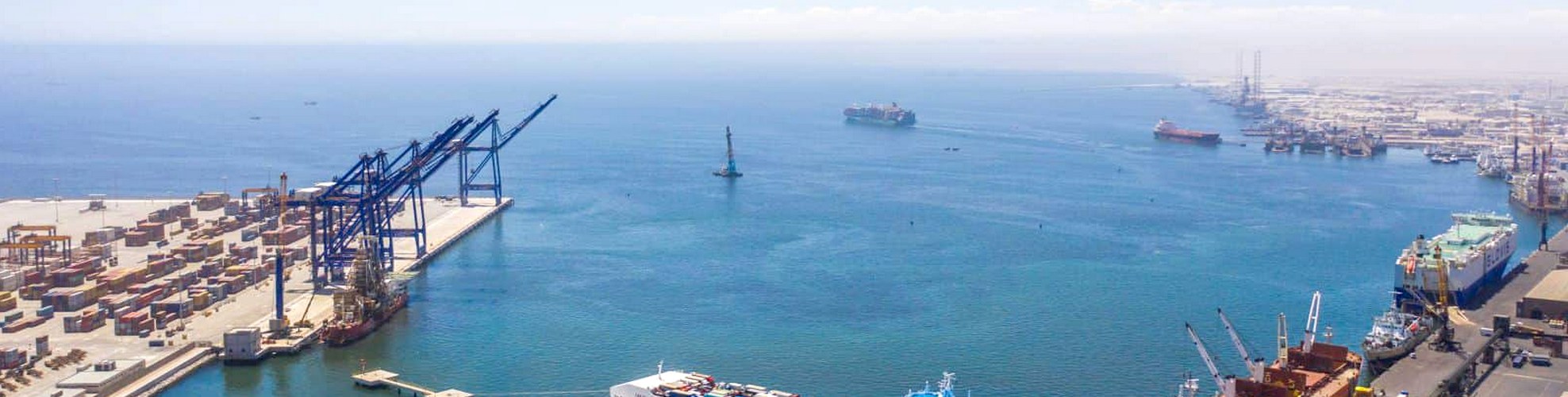
Operated by the Namibia Ports Authority, the port consists of the commercial port and the fishing harbour and provides a range of terminal facilities for containerised cargo, bulk and break-bulk commodities, as well as refrigerated and dry cargo.
The development of the new container terminal significantly increased the port’s cargo-handling capacity and strengthened Walvis Bay’s position as a regional logistics hub. The port is supported by modern infrastructure and equipment, ensuring efficient cargo handling and competitive vessel turnaround times.
Ship repair and marine engineering services are also available at the port, including facilities such as the Synchrolift and floating docks that support fishing fleets and offshore vessels.
Airport

Runway information:
Aerodrome Reference Code: 3C
Runway Length : 1830 m
Runway Width : 30 m
Secondary Runway Length: 1193 m
Secondary Runway Width : 30 m
Aerodrome Rescue and Fire Fighting Category: Cat 4
Water and Electricity

Electricity supply to Walvis Bay is reliable and forms part of Namibia’s national grid, which is connected to the Southern African Power Pool and supported by regional generation sources.
Telecommunications
Namibia has one of the more advanced telecommunications infrastructures in Africa, with extensive fibre-optic networks, modern broadband services and widespread mobile connectivity. Telecommunications services in Walvis Bay are provided by companies such as MTC Namibia, Telecom Namibia, and Paratus Namibia, ensuring reliable national and international communication links.Medical Facilities

The city also hosts a number of educational institutions, including primary and secondary schools, vocational training centres and tertiary education branches, contributing to the development of local human resources.
Environmental and Social Responsibility

Tourism

While the neighbouring town of Swakopmund is widely known as the region’s tourism centre, it is important to note that the municipal boundary lies at the Swakop River bridge. Much of the dune belt and coastal area south of the river—including Langstrand and the dune fields where many adventure activities take place—falls within the jurisdiction of Walvis Bay.
Walvis Bay is well suited to an outdoor lifestyle and offers a wide range of recreational activities including sandboarding, kitesurfing, surfing, swimming, angling, sailing and golf. The strong and consistent south-westerly coastal winds create ideal conditions for wind-driven water sports, making the area particularly popular with kitesurfing enthusiasts.
Coastal Recreation

One of Namibia’s most famous desert landmarks is Dune 7, one of the highest sand dunes along the Namibian coast. Located just outside Walvis Bay, the dune is a popular attraction for visitors who enjoy climbing the crest for panoramic views of the surrounding desert landscape.
The extensive coastal dune belt south of the Swakop River provides ideal terrain for activities such as sandboarding, quad biking and paragliding. These dunes, although often associated with Swakopmund tourism marketing, are largely situated within the Walvis Bay municipal area.
Lagoon and Birdlife

Up to 200,000 birds representing more than 50 species can be found here, including flamingos, pelicans and other migratory shorebirds. A scenic promenade stretching along the lagoon allows visitors to enjoy birdwatching and panoramic views of the bay.
To the south of the lagoon lie the colourful evaporation ponds of the Walvis Bay Salt Holdings salt works, where striking red and pink hues are created by algae in the shallow ponds.
Marine Wildlife and Ocean Activities

Common sightings include bottlenose dolphins, while leatherback turtles and several whale species are occasionally seen during seasonal migrations.
A unique feature visible north of Walvis Bay is the Walvis Bay Guano Platform, a large offshore structure supported by hundreds of wooden stilts and historically used for the collection of seabird guano.
Visitor Services

Pelican Point

The area can be accessed by guided 4×4 excursions across the salt pans and tidal flats, offering visitors the opportunity to observe thousands of seals, seabirds and other marine wildlife in their natural environment. The peninsula’s remote coastal scenery, shipwrecks and panoramic ocean views make it one of Walvis Bay’s most unique tourism experiences.
Sandwich Harbour

Accessible only by guided 4×4 vehicles due to shifting tides and soft desert terrain, Sandwich Harbour has become one of the region’s most popular excursions, particularly for visitors arriving on cruise liners at the Port of Walvis Bay. The area is also an important wetland habitat supporting large numbers of migratory birds, making it a favourite destination for photographers, nature lovers and adventure seekers.
Namibia Chamber of Commerce and Industry – Walvis Bay

The NCCI’s primary mandate is to advocate for the interests of its members and provide a wide range of services to the business community in Namibia and abroad. Its membership comprises over 2,500 businesses across all sectors of the Namibian economy. The NCCI has established branches in 14 towns, bringing its services closer to members across the country.

To support its members, the NCCI offers services designed to enhance competitiveness, improve efficiency, and facilitate growth, including:
- Guidance on adapting to global business trends
- Implementation of industry best practices
- Insights into government policies and regulations
- Networking opportunities with local and international entrepreneurs
Contact – NCCI Walvis Bay